
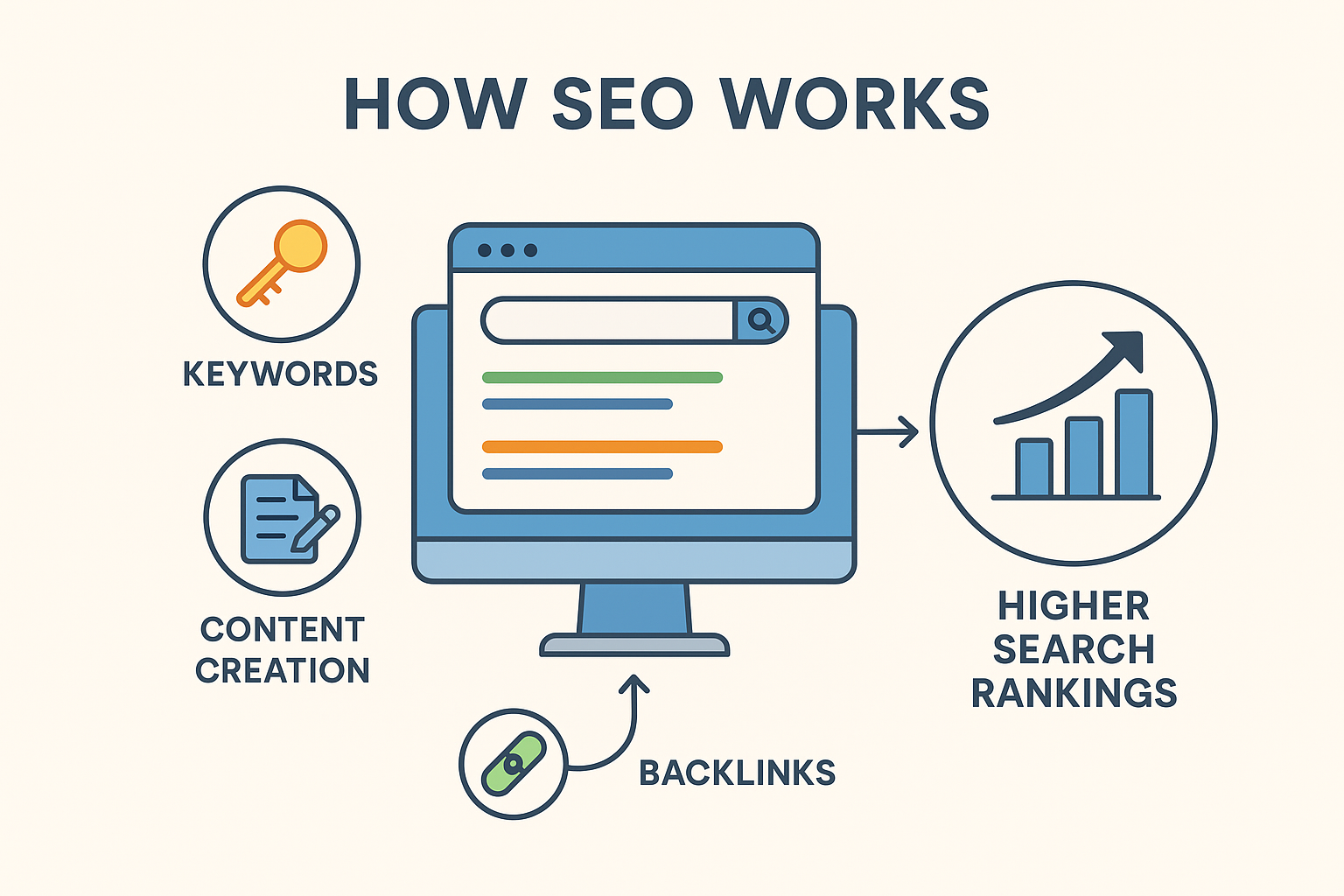

Search Engine Optimization (SEO) is the foundation of digital success. Whether you’re a small business owner, digital marketer, or content creator, understanding how SEO works is the first step to building long-term visibility and connecting with your target audience in the United States.
In a world where more than 90% of online experiences begin with a search engine, your ability to appear at the top of results determines your online success. SEO goes beyond keywords or backlinks: it’s about understanding your audience’s needs and optimizing your online presence to meet those needs better than your competitors.
In this guide, we’ll break down how SEO works, why it matters for your brand, and how you can use proven strategies to achieve lasting results in search engine rankings.
What Is SEO and Why Does It Matter?
SEO (Search Engine Optimization) is the process of improving your website to increase visibility when users search for products or services in Google, Bing, or other search engines. The better your visibility in search results, the more likely you are to attract qualified visitors and convert them into customers.
At its core, SEO helps both users and search engines understand your website. Search engines use complex algorithms to decide which websites deserve the top rankings. You can align your site with these algorithms by improving three key areas:
- Technical Optimization: Ensuring your website is fast, mobile-friendly, and easy for search engines to crawl. Learn more about technical SEO best practices.
- On-Page Optimization: Crafting keyword-rich, relevant, and well-structured content. Explore our on-page SEO services to learn how to do this effectively.
- Off-Page Optimization: Building your site’s reputation through backlinks and mentions across credible sources. Discover our off-page SEO strategies for brand authority.
Why does SEO matter? Because search results are a zero-sum game. If your competitor ranks higher, they capture traffic you don’t. In the U.S., the first page of Google captures around 95% of search traffic—if you’re not there, you’re practically invisible.
Investing in SEO is like building your digital foundation—it’s cost-effective, scalable, and produces compounding results over time, unlike ads that stop the moment your budget does.
The Core Components of How SEO Works
To understand how SEO works, it’s essential to break it down into interconnected components. SEO isn’t a single tactic—it’s a system of strategies that work together to help your website perform better and rank higher.
1. Keyword Research: The Starting Point of Every SEO Strategy
Keyword research is the cornerstone of every successful SEO campaign. It connects what users are searching for with the content you offer.
To get started, identify the right keywords—those with good search volume and achievable ranking potential.
Steps to Conduct Keyword Research:
- Use tools like Google Keyword Planner, Ahrefs, or SEMrush.
- Determine search intent—why a user is searching for that term.
- Use a mix of short-tail and long-tail keywords for balance.
For example, “how SEO works” is a short-tail keyword, while “how SEO works for brand marketing in the U.S.” is a more targeted long-tail variation.
Learn more about keyword intent and research strategies at HubSpot’s keyword research guide.
2. On-Page SEO: Optimizing Your Website’s Content
Once you have your target keywords, focus on on-page SEO to make your pages both user- and search-engine-friendly.
Key On-Page Elements Include:
- Title Tags: Use your primary keyword naturally and clearly.
- Meta Descriptions: Write concise, engaging summaries to increase clicks.
- Headings (H1–H6): Organize your content with structured headings.
- Internal Links: Connect related pages for better site structure and authority.
- Content Quality: Create informative, valuable, and easy-to-read content.
On-page SEO ensures your content satisfies both search intent and readability. For professional support, check out Rank Ryan’s on-page SEO optimization services.
3. Technical SEO: Building a Solid Website Foundation
Technical SEO is the engine under the hood—it ensures that your website runs smoothly and that search engines can crawl and index it efficiently.
Technical SEO Checklist:
- Optimize for fast loading speeds.
- Ensure mobile responsiveness across all devices.
- Submit XML sitemaps through Google Search Console.
- Fix broken links and avoid duplicate content.
- Secure your website with HTTPS.
A technically optimized site ranks higher and offers a better user experience, both of which impact conversions. Explore Rank Ryan’s technical SEO services for professional site audits and improvements.
4. Off-Page SEO: Building Authority and Trust
Off-page SEO focuses on what happens beyond your site—specifically, how other sites perceive your brand. It’s about earning backlinks and mentions that signal trust and credibility.
Effective Off-Page SEO Strategies:
- Guest blogging on industry-relevant sites.
- Getting featured in online publications.
- Leveraging social media engagement and PR.
- Collaborating with influencers in your niche.
High-quality backlinks are like votes of confidence. Learn how SEO backlinks work and strengthen your online authority through Rank Ryan’s off-page SEO strategies.
5. Content Marketing: The Engine That Powers SEO
Content marketing gives your SEO strategy life. It’s how you attract, engage, and convert visitors.
Content Types That Support SEO:
- Blog posts and educational guides.
- Videos, infographics, and visuals.
- Case studies and product tutorials.
Each content piece should be optimized around a keyword while offering genuine value. Great content answers user questions like “how do I know if my SEO is working?” or “how long does SEO take to work?”—making your brand a trusted source of insight.
For more, see What Is SEO? to understand the foundation of content-driven optimization.
6. Analytics and Continuous Optimization
SEO is not a one-time task—it’s a continual process of testing, analysis, and refinement.
Track Key Metrics:
- Organic traffic growth
- Keyword ranking changes
- Conversion rates
- Bounce rate and dwell time
Tools like Google Analytics and Search Console show how to check if your SEO is working and where you can improve. Working with an experienced SEO strategist ensures that you make data-driven adjustments for consistent growth.
Real-World Example: How SEO Transformed a Local Business
A small digital agency in Texas wanted to rank for “digital marketing services.” By focusing on local SEO, optimizing for “SEO agency in Texas,” and creating educational content about how SEO works for brand marketing, they achieved a 300% traffic increase within six months.
Their success came from balancing technical optimization, high-quality content, and strategic link-building—proof that SEO success is achievable for businesses of all sizes across the U.S.
Expert Tips and Best Practices for SEO Success
To maximize results and ensure your SEO strategy continues to perform:
- Prioritize user experience (UX): fast loading, clear navigation, and mobile optimization.
- Avoid over-optimization: write naturally and focus on readers first.
- Stay consistent: publish new content regularly to build authority.
- Focus on E-E-A-T (Expertise, Experience, Authoritativeness, Trustworthiness).
- Keep learning: Follow trusted resources like Moz’s Beginner’s Guide to SEO and Search Engine Journal.
Remember: shortcuts like buying backlinks or using automated link schemes can lead to Google penalties. Ethical, long-term SEO always wins.
Conclusion: Mastering How SEO Works for Long-Term Growth
Understanding how SEO works gives your brand an advantage in a crowded digital landscape. It’s more than a marketing tactic—it’s a long-term investment in your business’s visibility and authority.
By focusing on keyword strategy, technical performance, and content quality, your website can attract steady, qualified traffic that converts into loyal customers.
At Rank Ryan, we help businesses across the United States build data-driven SEO strategies that deliver measurable, lasting results.
FAQs About How SEO Works
1. How long does it take to see SEO results?
Typically, it takes 3–6 months to notice improvements, depending on your competition and site condition.
2. Is SEO better than paid ads?
SEO delivers sustainable, long-term traffic, while ads provide instant visibility. A hybrid strategy often works best.
3. What are the top SEO ranking factors?
Content quality, backlinks, mobile-friendliness, speed, and user experience.
4. Can I do SEO myself?
Yes, but hiring professionals like Rank Ryan’s SEO strategist ensures faster, consistent growth.
5. How often should I update my content for SEO?
Review and update every 3–6 months to maintain freshness and accuracy.
