
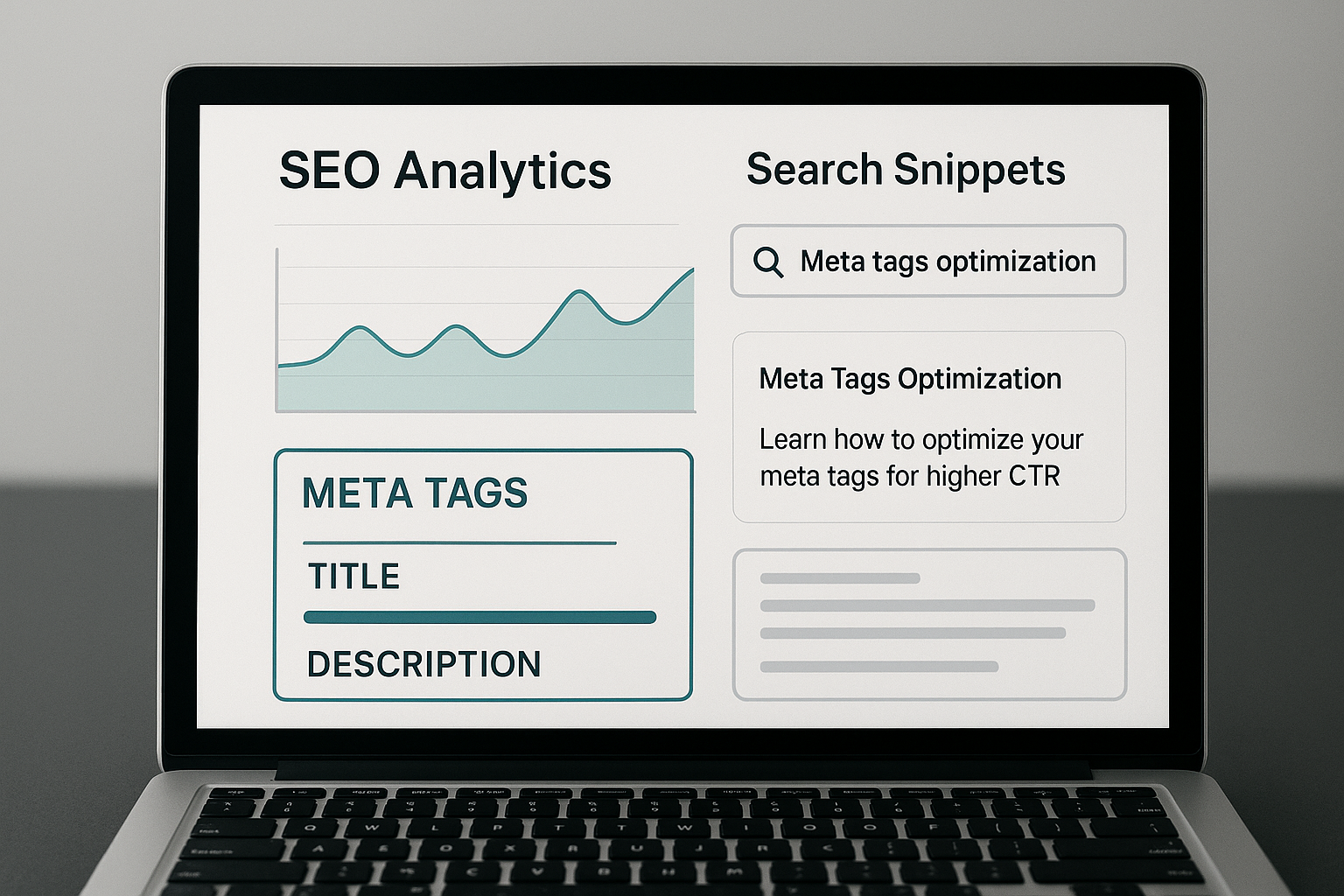

Why Meta Tag Optimization Is the Hidden Key to Clicks
Ever wonder why your page ranks decently but still struggles to get clicks? You’re not alone. Many site owners master keyword research and backlinks but overlook one powerful, underused lever: meta tags optimization.
Meta tags for search engine optimization are small snippets of text that tell search engines what your page is about. But their real magic lies in how they influence click-through rate (CTR). A well-optimized title and description can mean the difference between getting buried in search results or standing out like a beacon.
In this guide, we’ll unpack the art and science of meta tag optimization in SEO for both humans and algorithms. You’ll learn:
- How to write compelling title and description tags that attract clicks
- The best practices for length, keywords, and formatting
- Tools and frameworks to measure and improve performance
By the end, you’ll have a step-by-step plan to transform your metadata into a CTR-driving machine. Let’s dive in.
Understanding Meta Tags and Their Role in SEO Success
Before optimizing, it’s crucial to understand meta tag optimization meaning and why it’s foundational to on-page SEO. Meta tags appear in your webpage’s HTML and give search engines structured information about your content.
They matter because they:
- Influence how your page appears in search results
- Impact how users perceive relevance and trust
- Support higher click-through rates by aligning content with intent
Core meta tags you should focus on include:
- Title Tag: Defines the clickable headline shown in SERPs.
- Meta Description: Summarizes page content under the title.
- Meta Robots Tag: Instructs search engines on how to index your page.
Ignoring search engine optimization meta tags is like crafting a masterpiece but hiding it in a dark gallery — no one sees it. When optimized, they act as your digital storefront, inviting the right visitors inside.
For deeper insight, explore Moz and Search Engine Land — both excellent resources for mastering seo optimization meta tags.
How to Master Meta Tag Optimization for Higher CTR
Step 1: Understand Search Intent Before Writing Meta Tags
Every successful meta tag optimization begins with understanding what the user is really searching for. Someone typing “best meta tag examples” wants guidance, while “buy SEO tools” signals transactional intent.
Identify the intent type (informational, navigational, or transactional).
Align your meta title and description accordingly.
Use emotion or urgency when it fits the query (“Boost CTR Fast,” “Expert Tips”).
Pro Tip: Use tools like Google Search Console or SEMrush to see which keywords bring impressions but low clicks — these are your top optimization opportunities.
Step 2: Craft Compelling and Keyword-Rich Meta Titles
Your meta title is the most visible and influential tag in your HTML. It’s the clickable headline users see on search results — the first impression that decides if they’ll click.
To create irresistible titles:
- Place your primary keyword near the beginning
- Keep it under 60 characters
- Use power words like “Best,” “Secrets,” or “Proven”
- Match search intent with tone (educational, persuasive, etc.)
Example:
- Weak: “Meta Tags Optimization | Rank Ryan”
- Strong: “Meta Tag Optimization Secrets to Boost CTR | Rank Ryan”
Pro Tip: Study top-ranking pages on Forbes and HubSpot to reverse-engineer phrasing that earns clicks.
Step 3: Write Meta Descriptions That Convert Browsers into Clickers
Your meta description acts as the “ad copy” for your page in Google’s results. While it doesn’t directly affect rankings, it heavily impacts CTR — a critical behavioral signal.
A great description:
- Is under 160 characters
- Includes your primary keyword naturally
- Offers a clear benefit or solution
- Uses an active, conversational tone
Example:
“Unlock the secrets of meta tags optimization to boost CTR, visibility, and engagement with Rank Ryan’s proven SEO tactics.”
Pro Tip: Always write descriptions manually. Auto-generated ones often miss emotional triggers or context.
Step 4: Optimize Meta Tag Lengths and Formatting for Readability
Even perfect wording won’t work if your tags get cut off. Google typically displays:
- Title tags: 50–60 characters
- Descriptions: 150–160 characters
Stick to these ranges and:
- Avoid all caps or symbol clutter
- Use separators like “|” for clarity
- Capitalize key words for emphasis
Pro Tip: Use meta tag optimization tools such as Yoast SEO or Rank Math to preview your tags before publishing.
Step 5: Measure, Test, and Refine for Continuous CTR Growth
Meta tag optimization is never “set it and forget it.” To sustain performance:
- Track CTR changes in Google Search Console
- A/B test variations of title and description tags
- Revisit older pages every quarter for updates
Pro Tip: If CTR drops after an update, experiment with emotional triggers like “Unlock,” “Discover,” or “Learn How” to re-engage searchers.
Practical Use Cases of Effective Meta Tag Optimization
Let’s see these strategies in action.
Case 1: An eCommerce Store Boosting CTR by 38%
A U.S. retailer optimized product title tags with emotional triggers (“Shop Stunning Winter Boots | Free Shipping”). Within 30 days, CTR rose by 38%, and conversions followed suit.
Case 2: A SaaS Company Improving Demo Signups
A software brand revised meta descriptions from generic copy to benefit-driven messaging (“Automate Reports in Minutes | Try Free”). The result: 22% higher CTR from organic search.
Case 3: Local Business Targeting Regional Visibility
A New York law firm added geographic keywords to meta titles (“Best Personal Injury Lawyers in NYC”). This tweak boosted local search clicks by 31% in two months.
Takeaway: Whether you’re a national brand or a small business, precise meta tag keyword optimization directly boosts visibility and engagement.
Best Practices and Common Mistakes in Meta Tag Optimization
Even top marketers sometimes overlook small but critical details. Avoid these pitfalls:
- Use unique meta tags for every page — duplicates confuse search engines
- Front-load important keywords
- Avoid keyword stuffing — it hurts readability and CTR
- Write for humans first, bots second
- Monitor regularly to stay aligned with Google’s changing algorithms
Pro Tip: Treat every tag as a micro-advertisement. Each word must earn its place.
If you want professional guidance, explore on-page SEO services, off-page SEO services, or technical SEO services from Rank Ryan to enhance performance across all fronts.
Turning Metadata into a CTR Powerhouse
Your meta tags aren’t just HTML lines — they’re your digital elevator pitch. With strategic meta tag optimization in SEO, you can transform impressions into clicks and clicks into customers.
Start small: update your top five underperforming pages. Test, analyze, and refine until your titles and descriptions consistently attract searchers.
If you want expert help with meta tag optimization services, connect with a professional SEO strategist today. The clicks you’ve been missing are closer than you think.
Frequently Asked Questions About Meta Tags Optimization
1. What is meta tags optimization in SEO?
It’s the process of refining title and description tags to align with search intent, improve visibility, and drive higher CTR from organic results.
2. How do optimized meta tags improve CTR?
Optimized meta tags for search engine optimization make your listing more appealing, encouraging users to click instead of scrolling past competitors.
3. What is the ideal length for meta titles and descriptions?
Meta titles should be under 60 characters, and descriptions should stay below 160 to avoid truncation.
4. Can I use the same meta description on multiple pages?
No, each page should have a unique meta description to reflect its specific content and keywords.
5. Which tools can help with meta tag optimization?
Tools like SEMrush, Moz, and Google Search Console are ideal for auditing and previewing meta tag optimization opportunities.
